
Scott County Parole Versus Probation
Parole and probation are not interchangeable. Parole is a discretionary release route for certain Kansas prisoners, often those serving older indeterminate sentences. The Kansas Prisoner Review Board decides whether an eligible person may leave prison under supervision. Postrelease supervision, by contrast, follows the prison portion of many determinate sentences. Probation is ordered by the sentencing court, usually with an underlying jail or prison term suspended as long as the person obeys the order. Community corrections is a more intensive, locally run form of supervision supported by the Kansas Department of Corrections.
The controlling document matters. A Scott County jail release record may show that local physical custody ended, but it does not establish the kind or length of supervision. For a state case, KASPER can show a KDOC status and movements. For probation, the Scott County District Court docket and actual probation order are stronger sources. A transfer from the Law Enforcement Center to KDOC is not release into the community.
| Term | Who imposes it | Best verification |
|---|---|---|
| Parole | Kansas Prisoner Review Board for eligible cases | KASPER status, Board record, KDOC |
| Postrelease supervision | Follows a qualifying prison sentence | KASPER and KDOC sentence record |
| Probation | Sentencing court | Court docket, filed order, Court Services |
| Community corrections | Court through intensive local supervision | Court order and district program |
| Discharge | Controlling court or corrections agency | Final filed order or KDOC status |
Verify Scott County Post-Release Supervision
Begin with identity and custody type, not a guess based on where the arrest occurred. A Scott conviction can lead to probation in the 25th Judicial District or incarceration at a KDOC prison outside the county. The county jail cannot confirm a later state parole event. Likewise, a KASPER search does not replace the Scott court file for a probation order.
- Search the Kansas District Court Public Access Portal by name or case number and narrow the result to Scott County. Read the judgment, sentence, probation, revocation, and discharge entries.
- For a KDOC case, open KASPER and compare the name, KDOC number, birth information, conviction county, movements, and status. “Parole” indicates community supervision; “Discharged” points to completed KDOC authority.
- Check the Prisoner Review Board schedule only as evidence of an upcoming step. Appearance on a list is not a parole grant.
- Contact the office named in the order. Ask about process and the right records channel, while expecting limits on personal information.
- Confirm completion through a filed discharge entry or final KDOC record. Absence from jail does not prove discharge.
Scott County Parole Board Records
The Kansas Prisoner Review Board handles parole for the Kansas cases within its authority. Its monthly public-comment material identifies people approaching an eligibility hearing. The county shown is the county of conviction, not the person’s current home, prison, or planned release site. A listed person may be held far from Scott County.
The Board may parole, pass, or continue a case. A pass is a denial with a later review period. A continue postpones action while more facts, an evaluation, votes, or deliberation are needed. Eligibility means the Board may consider release; it is not a promised date. No authoritative public name-searchable database of all current Board results was found. Later KASPER status and movement entries, followed by a releasable Board record when needed, provide the sounder trail.
The official Board process page explains those outcomes. The manifest capture below shows that source. It helps distinguish a decision type from an actual movement out of prison.

After a favorable decision, confirm the later release and supervision status through KDOC rather than treating the hearing entry as the event itself.
Scott County Absconder Status
KASPER offers Parole and Absconder status filters. KDOC also maintains separate parole absconder and community corrections absconder searches. Scott County may be selected as the last supervision location where the interface permits. The repository generally updates on working days, so the display can trail a new arrest or court action.
An absconder is a person reported as no longer maintaining required supervision contact. That label does not, by itself, prove there is an active warrant or show where the person is now. KDOC material notes that a community-corrections designation may follow a missed appointment and failure to make face-to-face contact within ten days, yet the person may or may not have a warrant or NCIC entry. Confirm warrant status with the court or law enforcement. No official Scott County public warrant list was found.
- Absconder
- A person reported as having stopped required contact with supervision.
- Violation
- An alleged breach of a supervision term; the court or agency decides the result.
- Revocation
- An order ending community supervision and imposing another custody result.
- Discharge
- The end of the authority shown by the court or corrections agency.
Scott County Supervision Offices
Scott participates in two real supervision systems. 25th Judicial District Court Services assigns a Court Services Officer to Scott probation cases. The six-county Community Corrections program serves Finney, Greeley, Hamilton, Kearny, Scott, and Wichita Counties. Neither office is a public inmate locator. Their staff can explain process and route a records question, but direct disclosure about an individual may be limited.
607 West Santa Fe
Garden City, KS 67846
620-271-6150
Monday-Friday, 8 a.m.-noon and 1-5 p.m.
607 West Santa Fe
Garden City, KS 67846
620-271-6200
Monday-Friday, 8 a.m.-5 p.m.
The official Community Corrections source is shown below. Its six-county service area explains why a Scott County case can be managed from Garden City rather than by a stand-alone county office.
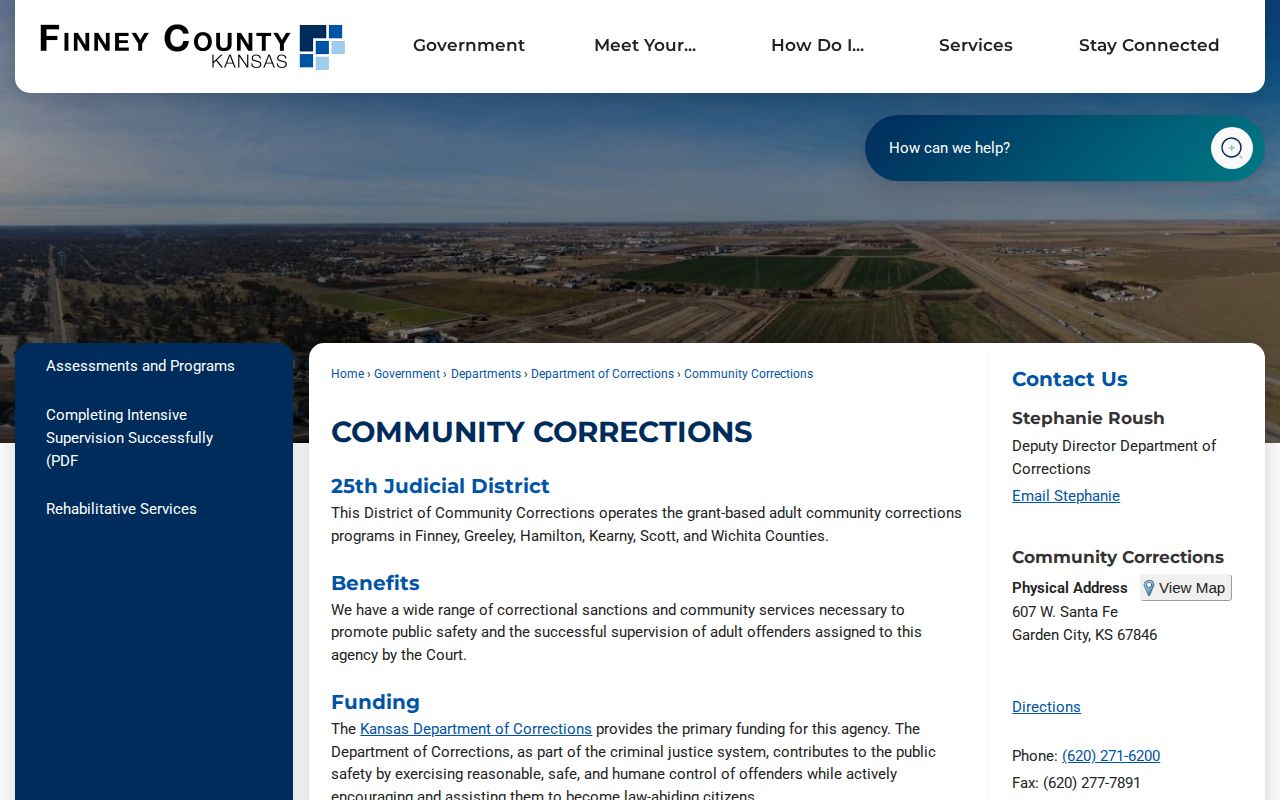
The image identifies the regional route, while the court order remains the source for the person’s actual assignment and terms.
Scott County Supervision Record Trail
Three records can describe one Scott County supervision episode without duplicating each other. The sentencing order states whether the court imposed probation, a county-jail term, or a state-prison sentence. A supervision file documents administration after the order, but much of its personal detail may not be open. A docket later records filed action such as a violation motion, warrant, revocation, modification, or discharge. For a KDOC case, KASPER adds state movements and the public status. Read each record for the job it performs.
The statewide case portal may show an entry without the full document image. That does not mean the order is unavailable. Kansas court access distinguishes online case information from courthouse records. Scott County’s clerk office has public terminals for open cases, and a focused court-record request can seek the actual order. Sealed and expunged matters, many juvenile or child matters, and other protected records are restricted.
A narrow request should name the person and case number, identify the document sought, and give an approximate filing date. Ask for the probation order, later modification, revocation order, or discharge entry rather than asking the clerk to decide whether a person is “still on probation.” For parole, request the releasable Board or KDOC record only after checking the current public status. That sequence reduces identity errors and preserves the difference between an eligibility event, supervised release, and final discharge.
Scott County Probation Activation
Scott probation cases use an assigned Court Services Officer, with outer-county staff based in the county courthouse when assigned there. Activation begins when the person reports as directed, completes a client information sheet, receives an assignment and appointment, and reviews the court’s conditions with the officer. The district says reporting commonly occurs once or twice each month based on assessment. That general pattern never overrides an individual order or an officer’s direction.
Conditions vary by case. At a high level, they may require scheduled reporting, compliance with court orders, and permission for certain changes. A claimed violation is not the same as a final revocation. Check the docket for a motion, hearing, warrant, revocation order, or later discharge. The official probation process page provides the local sequence.
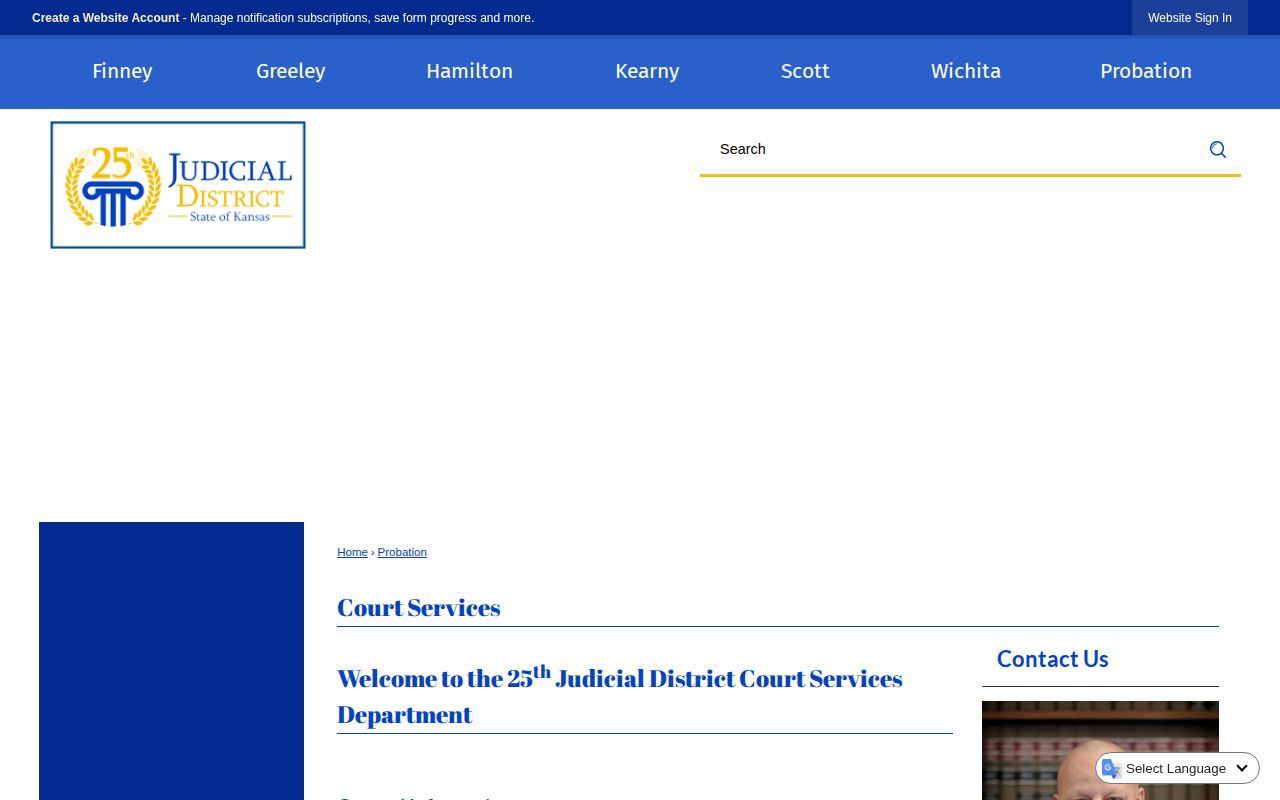
This local process view explains why the assigned officer and filed Scott County order must be read together.
Scott County ID After Release
Replacing identification can help a person meet routine reporting needs after release. Scott County can process most Kansas driver-license and identification-card applications at 303 Court in Scott City. The county driver licensing page says the examiner is generally available weekdays from 8:30 a.m. to 4:30 p.m. and advises calling 620-872-2640 because availability varies.
This is a document-replacement route, not proof of parole, probation, or discharge. No official jail property-return procedure was found. Questions about property left during a Scott County Law Enforcement Center stay should go to the facility, while ID application requirements belong to the licensing office.
Public Record Search
Sponsored Results